Exploring the Benefits of Coaching and Therapy: Which Option Is Right for You?

When it comes to personal growth and professional development, two of the most effective tools are coaching and therapy. While they may seem similar, the two approaches serve different purposes. Understanding the distinctions can help you choose the right path or even combine both to support your goals.

Related reading: 5 Differences Between Coaching and Psychotherapy

AWL Partners

Coaching: Unlocking Potential and Moving Forward

Coaching is a solution-focused, forward-looking approach that emphasizes the present and future. It helps individuals identify strengths, set goals, and develop strategies to overcome obstacles.

• Focuses on skills, performance, and outcomes
• Emphasizes strengths and potential rather than problems
• Encourages accountability, reflection, and measurable progress

👉 At AWL Partners, we specialize in coaching leaders and teams to navigate change with clarity and confidence.

When coaching helps most:

• Developing leadership skills
• Enhancing workplace performance
• Building self-confidence for decision-making
• Navigating change or pursuing a promotion

Harvard Business Review reports that coaching not only improves performance but also increases employee engagement and retention.

Therapy: Healing, Understanding, and Growth

Therapy, on the other hand, is more introspective and focused on healing. It provides a safe and confidential environment for processing emotions, uncovering patterns, and working through challenges.

• Addresses underlying causes of behaviour or emotional struggles
• Provides tools to manage anxiety, stress, or trauma
• Helps reframe thought patterns and improve mental health

Therapy is especially effective when you’re dealing with emotional wounds, unresolved issues, or mental health conditions that need professional support.

According to the American Psychological Association, therapy helps individuals build resilience and adapt more effectively in stressful environments.

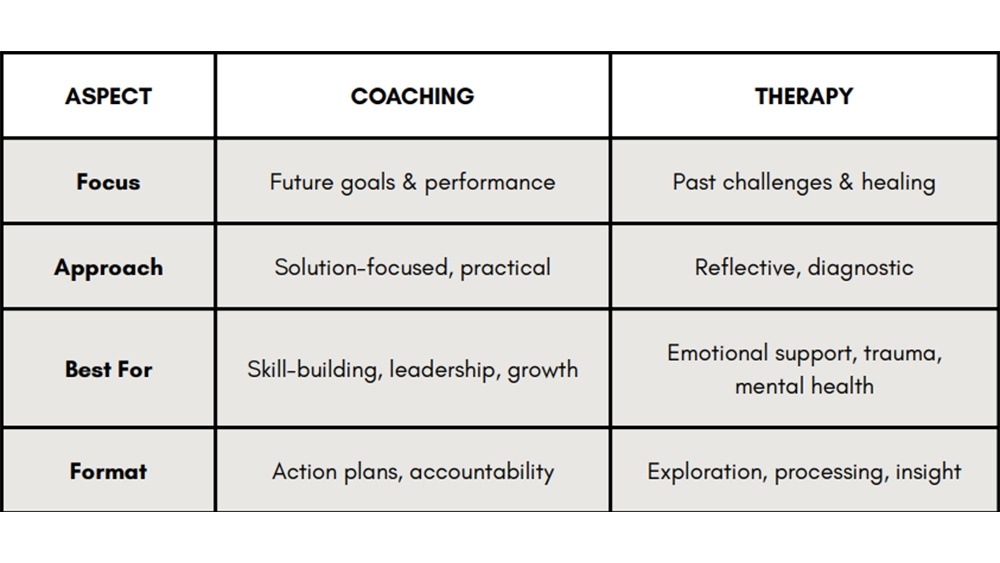
Coaching vs. Therapy: Key Differences

AWL Partners

Both approaches are valuable, but which one is right for you depends on your specific needs.

Can Coaching and Therapy Work Together?

Absolutely. Many leaders and professionals benefit from both approaches at different times. Therapy provides healing and insight; coaching builds on that foundation with tools and strategies for future success.

The World Economic Forum’s Future of Jobs Report 2025 emphasizes the growing importance of emotional intelligence, resilience, and adaptability — skills developed in both therapy and coaching.

How to Decide Which Path to Take

Ask yourself:

• Am I primarily seeking to develop new skills, habits, or leadership abilities? → Coaching may be the better fit.
• Am I looking to process emotions, heal from experiences, or gain deeper insight into my patterns? → Therapy  may be more helpful.
• Do I need both? → A blended approach can be powerful.

👉 If you’re unsure where to start, a discovery call with AWL Partners can help clarify your goals and guide you to the right solution.

AWL Partners

Moving Forward

Whether you choose coaching, therapy, or both, the important thing is that you are investing in yourself. Personal development is a lifelong journey, and the right support can help you build confidence, overcome challenges, and thrive in your career and life.

At AWL Partners, we believe in the power of both approaches to help individuals and organizations reach their full potential.

👉 Ready to take the next step?

Contact us today to explore coaching, therapy, and other growth strategies for leaders and teams.

© Copyright AWL Partners - All Rights Reserved   AWL Blog   Privacy Policy